
Understanding the Modern Epidemic and Evidence-Based Solutions
TL;DR: Key Takeaways
Sleep anxiety is excessive worry about sleep quality or falling asleep that paradoxically prevents rest. It affects a substantial portion of Canadian adults, with prevalence increasing significantly since the pandemic.
The relationship is bidirectional: anxiety disrupts sleep, and poor sleep amplifies anxiety, creating a self-perpetuating cycle.
Blue light is overblown: research shows it delays sleep onset by only about 10 minutes. The real culprits are time displacement and cognitive stimulation from engaging content.
Sleep trackers can backfire: “Orthosomnia”—obsessing over sleep scores—creates the very anxiety that prevents good sleep.
CBT-I (Cognitive Behavioural Therapy for Insomnia) is the gold-standard treatment, recommended as first-line therapy over sleep medications by major medical organizations including the Canadian Sleep Society.
What Is Sleep Anxiety?
Definition: Sleep anxiety is excessive worry about sleep quality, duration, or the ability to fall asleep that paradoxically prevents the very rest a person seeks. Unlike clinical insomnia (a diagnosable sleep disorder), sleep anxiety refers specifically to the anticipatory fear and cognitive preoccupation surrounding sleep, though the two conditions frequently co-occur and reinforce each other.
Introduction
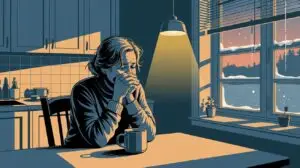
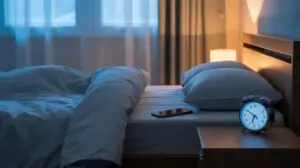
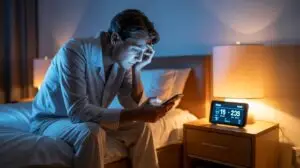
It’s 2:37 AM. You’re staring at the ceiling, counting the hours until your alarm. Your phone lights up with a notification you promised yourself you wouldn’t check. Tomorrow’s meeting, unread emails, the smartwatch score from last night—everything crowds your mind. Sleep isn’t coming. And the harder you try, the further it slips away.
This experience—the fear of not getting enough sleep wrestling with doom-scrolling, the pressure to sleep “right” and achieve sufficient rest—is keeping many Canadians awake. Health experts increasingly recognize this phenomenon as sleep anxiety: excessive worry about sleep quality or the inability to fall asleep that paradoxically prevents the very rest we seek.
Sleep anxiety has emerged as a significant wellness challenge, fuelled by increasing digital dependency, economic uncertainty, work-life imbalance, and the lingering effects of pandemic-era disruptions. For those of us living in Saskatchewan—where vast distances, rural isolation, and limited access to specialized mental health services outside urban centres create additional barriers—addressing sleep anxiety requires understanding both the science and the practical realities of getting help. This article examines the current evidence on sleep anxiety prevalence, its mechanisms, and evidence-based interventions.
The Scope of the Problem
Rising Anxiety, Declining Sleep in Canada
The data reveal a concerning trajectory. According to the Canadian Mental Health Association’s State of Mental Health in Canada 2024 report, Canadians report having “poor” or “fair” mental health three times more often than before the pandemic (26% in 2021 compared to 8.9% in 2019). An estimated 2.5 million Canadians with mental health needs reported they weren’t getting adequate care—roughly equal to the combined population of Manitoba and Saskatchewan.
Statistics Canada data show that the proportion of Canadians aged 15 and older with generalized anxiety disorder doubled from 2012 to 2022, rising from 2.6% to 5.2%. When it comes to sleep specifically, a 2024 study by the Canadian Sleep Research Consortium found that 16.3% of Canadian adults meet diagnostic criteria for insomnia disorder, with higher rates among women, Indigenous peoples, and those with poorer mental or physical health.
Approximately 48% of Canadian adults report having trouble sleeping, and insomnia prevalence has increased by 42% since 2007. Women are particularly affected, with 23.1% experiencing nighttime insomnia symptoms compared to 14.8% of men.
The Saskatchewan Context
Saskatchewan faces unique challenges in addressing sleep and mental health concerns. With 35% of the population living in rural areas, vast geographical distances separating many communities from major urban centres, and 16% of the population being Indigenous, the province faces distinct obstacles in mental health service delivery. The 2024-25 provincial budget included $574 million for mental health and addictions services—a 10.9% increase—but advocates note that ensuring these resources reach rural and northern communities remains an ongoing challenge.
For Saskatchewan residents outside Regina and Saskatoon, accessing specialized sleep medicine or mental health services often means travelling significant distances. This reality makes understanding self-help strategies and evidence-based approaches all the more important.
The Post-Pandemic Legacy
The COVID-19 pandemic significantly disrupted sleep health across Canada. Research indicates that compared to 2019, adults in early 2020 were more than three times more likely to screen positive for depression, anxiety, or both.
While acute pandemic effects have diminished, the disruption to sleep patterns, increased remote work blurring work-life boundaries, and heightened baseline anxiety levels have persisted for many. The pandemic fundamentally altered how millions of Canadians relate to their homes, their work, and their rest—and those changes haven’t fully reversed.
Understanding the Mechanisms
The Anxiety-Sleep Bidirectional Relationship
Research consistently demonstrates that anxiety and sleep disturbances exhibit a bidirectional relationship: anxiety-induced hyperarousal disrupts sleep architecture, while sleep deprivation amplifies emotional vulnerability. This creates a self-perpetuating cycle that can be difficult to break without intervention.
Key Insight: The anxiety-sleep relationship is bidirectional and self-reinforcing. Anxiety triggers hyperarousal that prevents sleep, while sleep deprivation increases emotional reactivity and amplifies anxiety—creating a cycle that requires targeted intervention to break.
At the physiological level, chronic worry activates the sympathetic nervous system, maintaining a state of heightened arousal. This results in elevated heart rate, muscle tension, and increased cortisol release—all incompatible with the relaxation necessary for sleep onset. Sleep deprivation further increases cortisol levels and amplifies emotional processing in the limbic system, intensifying feelings of anxiety.
People who experience sleep anxiety often find themselves caught in what clinicians describe as a “vicious circle”: worry about falling asleep, staying asleep, and not getting enough rest creates fear that makes it harder to sleep, which worsens daytime anxiety. Over time, the bed itself can become a trigger for anxiety rather than a place of rest.
The Always-On Lifestyle
Modern work culture contributes significantly to sleep anxiety. The constant connectivity enabled by smartphones means the workday never truly ends for many professionals. Irregular work hours, the corporate glorification of overwork, and the cultural equation of exhaustion with dedication all fuel the problem.
The constant pinging of notifications demands our attention and maintains a state of cognitive arousal long after we should have wound down. Many adults develop anxiety around sleep because, finding their minds racing, they feel they might as well “get some stuff done”—further reinforcing the cycle of evening productivity and restless nights.
Screen Time and Sleep: Beyond the Blue Light Myth
Popular media frequently blame “blue light” from screens for sleep problems. However, the scientific evidence is considerably more nuanced than headlines suggest—and understanding the real mechanisms matters for developing effective solutions.
What the Research Actually Shows
A 2024 consensus statement from the National Sleep Foundation convened an expert panel to assess associations between screen use and sleep. Notably, consensus was not reached on whether light emitted by screen-based digital media devices before sleep impairs sleep health in adults. The panel found that interventions filtering short-wavelength “blue light” consistently showed only minimal improvements in sleep health.
A 2022 systematic review in Frontiers in Psychology examined 24 studies on blue light and sleep in young adults. Only one in five studies reported decreased sleep quality after blue light exposure, while one in three reported decreased sleep duration. The authors concluded that the specific effects of blue light exposure “still remain a murky field.”
More recent research from Sleep Medicine Reviews suggests that blue light’s impact on sleep onset latency is relatively small—averaging delays of no more than about ten minutes. Other factors appear far more significant.
Key Insight: Blue light glasses and screen filters show minimal sleep benefits in research. The real issue isn’t the light spectrum—it’s that screens keep us awake because we’re using them instead of sleeping, and the content we consume activates our minds.
What Actually Matters
If not blue light specifically, what explains the consistent association between evening screen use and poor sleep? Research points to several factors:
Time displacement: A 2024 study in JAMA Network Open found that the association of screen time with sleep operates primarily through time displacement—screens delay sleep onset because we’re engaging with them instead of sleeping, not because of any direct physiological effect of the light itself.
Cognitive and emotional arousal: The content we consume matters more than the light spectrum. Engaging, stimulating, or anxiety-provoking content—news, social media, work emails—activates the mind in ways incompatible with sleep onset.
Behavioural patterns: Screen use often accompanies or substitutes for wind-down routines. The “just one more scroll” phenomenon reflects difficulty disengaging rather than light-induced wakefulness. Screens, besides being bright, are simply too interesting.
The Sleep Tracker Paradox: When Optimization Backfires
Ironically, technology designed to improve sleep may sometimes worsen it. With smartwatches and sleep apps tracking every movement, people often judge their sleep based on numbers and scores rather than how they actually feel.
Clinicians have identified a phenomenon called “orthosomnia”—a preoccupation with achieving perfect sleep metrics that paradoxically causes anxiety and impairs sleep. The term, coined in 2017, combines “ortho” (correct) and “somnia” (sleep), reflecting the perfectionist quest for ideal sleep patterns similar to orthorexia’s unhealthy preoccupation with healthy eating.
A poor reading on a sleep tracker can trigger worry and frustration, creating a cycle where anxiety about sleep becomes the very reason sleep stays away. Research published in the Journal of Clinical Sleep Medicine has documented cases of patients presenting with sleep complaints driven primarily by their tracker data, despite experiencing restful sleep subjectively.
Key Insight: Sleep trackers can create a paradox: the pursuit of perfect metrics generates anxiety that disrupts the very sleep you’re trying to optimize. If you feel rested but your tracker says otherwise, trust your body over the device.
The pressure to “sleep right” based on device feedback transforms a naturally restorative process into a source of performance anxiety. Sleep, by its nature, requires letting go—and the harder you try to control and optimize every metric, the more difficult that release becomes.
Clinical Implications and Evidence-Based Interventions
Cognitive Behavioural Therapy for Insomnia (CBT-I): The Gold Standard
The most effective treatment for chronic insomnia and sleep anxiety is Cognitive Behavioural Therapy for Insomnia (CBT-I). This structured programme, typically delivered over 4-8 sessions, combines behavioural and cognitive strategies that address the underlying factors maintaining sleep difficulties.
CBT-I includes several core components:
- Sleep restriction: Temporarily limiting time in bed to match actual sleep time, creating mild sleep deprivation that increases sleep drive and consolidates sleep
- Stimulus control: Reestablishing the bed and bedroom as cues for sleep rather than wakefulness (e.g., leaving bed when unable to sleep, using the bed only for sleep and intimacy)
- Cognitive restructuring: Identifying and challenging unhelpful beliefs about sleep (“I need 8 hours or I can’t function”) and reducing catastrophic thinking about sleep loss
- Sleep hygiene education: Optimizing behaviours and environment to support sleep, though hygiene alone is rarely sufficient for clinical insomnia
CBT-I is recommended as first-line treatment by the Canadian Sleep Society, the American Academy of Sleep Medicine, and the European Sleep Research Society. Unlike sleep medications, CBT-I addresses the underlying psychological factors maintaining insomnia and produces durable improvements that persist—and often continue improving—after treatment ends.
In Canada, access to CBT-I varies by province. Ontario has expanded its publicly funded Structured Psychotherapy Programme, which includes CBT for anxiety and depression. For Saskatchewan residents, options may include private practitioners, online CBT-I programmes, or referral through your family physician. The Canadian Sleep Research Consortium has called for wider dissemination of evidence-based treatments for insomnia to reduce sleep health disparities across the country.
Sleep Hygiene: Foundation, Not Cure
While sleep hygiene alone is insufficient for treating clinical insomnia, it provides an important foundation. Evidence-based recommendations include:
- Consistent timing: Maintaining regular sleep and wake times—even on weekends—helps regulate circadian rhythms
- Wind-down routines: Creating a 30-60 minute buffer period before bed for relaxation activities helps transition from daytime alertness to sleep-ready relaxation
- Environment optimization: A cool (18-20°C), dark, quiet bedroom supports sleep physiology; ventilation and comfortable bedding matter more than many realize
- Limiting stimulating activities: Reducing engagement with arousing content—news, work, conflict—in the hour before bed is more important than avoiding screens per se
- Managing light exposure: Bright light exposure during the day strengthens circadian rhythms, while dimmer evening lighting supports melatonin production
Relaxation Techniques
Techniques that reduce physiological arousal can help counteract the hyperactivation associated with sleep anxiety:
- Diaphragmatic breathing: Slow, deep breathing activates the parasympathetic nervous system, reducing heart rate and promoting relaxation
- Progressive muscle relaxation: Systematically tensing and releasing muscle groups reduces physical tension that may interfere with sleep
- Mindfulness meditation: Practices cultivating present-moment awareness without judgment can reduce rumination about past events or future worries
- Guided imagery and soundscapes: White noise, nature sounds, or guided meditations can provide a focus for attention that displaces anxious thoughts
Reframing the Relationship with Sleep
Perhaps most importantly, effective treatment often involves changing how people think about sleep. Key cognitive shifts include recognizing that an occasional bad night’s sleep is normal and not harmful, understanding that prioritizing calm before bedtime may be as important as hours spent asleep, and learning that rest itself has value even when sleep remains elusive.
When to Seek Professional Help
While occasional sleep difficulties are normal, consider consulting a healthcare provider or sleep specialist if you experience:
- Difficulty falling or staying asleep at least three nights per week for three months or longer
- Significant daytime impairment (fatigue, difficulty concentrating, mood disturbances) related to sleep problems
- Increasing reliance on alcohol, cannabis, or over-the-counter sleep aids
- Sleep difficulties accompanied by symptoms of depression or anxiety
- Partner reports of loud snoring, gasping, or breathing pauses during sleep (possible sleep apnea)
In Canada, approximately 16% of adults meet criteria for insomnia disorder, yet many don’t seek help. Effective treatments exist—seeking help is a sign of self-care, not weakness.
For Saskatchewan residents, starting points include your family physician, who can provide referrals to sleep specialists or mental health services. The Saskatchewan Health Authority offers mental health services across the province, though wait times and availability vary by region. Online CBT-I programmes can be particularly valuable for those in rural areas where in-person services are limited.
Frequently Asked Questions
Is sleep anxiety the same as insomnia?
Not exactly. Sleep anxiety refers specifically to excessive worry and fear about sleep, while insomnia is a clinical diagnosis involving difficulty falling or staying asleep with associated daytime impairment. However, they frequently co-occur—sleep anxiety is often a core maintaining factor in chronic insomnia.
Do blue light glasses help with sleep?
Research shows minimal benefit. A 2024 National Sleep Foundation consensus statement found that blue light filtering interventions consistently showed only small improvements in sleep. The bigger issues are time displacement (screens keeping you up) and cognitive stimulation from engaging content.
Should I stop using my sleep tracker?
Not necessarily, but use it wisely. If checking your sleep score first thing in the morning causes anxiety, or if a “bad” score makes you feel tired regardless of how you actually slept, consider taking a break. Trust how you feel over what the device says. Sleep trackers can be useful for identifying patterns, but they shouldn’t become a source of stress.
What’s the best treatment for sleep anxiety?
Cognitive Behavioural Therapy for Insomnia (CBT-I) is recommended as first-line treatment by major medical organizations including the Canadian Sleep Society. It’s more effective than sleep medications for long-term outcomes and addresses the underlying psychological factors maintaining sleep difficulties.
How long does it take to overcome sleep anxiety?
With CBT-I, most people see significant improvement within 4-8 sessions. However, the anxiety-sleep cycle can take time to fully break. Consistent application of behavioural strategies—particularly sleep restriction and stimulus control—produces the fastest results, though initial weeks may feel challenging before improvement occurs.
Why does trying harder to sleep make it worse?
Sleep requires a relaxed, low-arousal state that’s incompatible with effortful striving. When you “try” to sleep, you engage cognitive processes that increase arousal—monitoring your state, evaluating progress, worrying about failure. This is why paradoxical techniques (accepting wakefulness rather than fighting it) often work better than direct effort.
What resources are available for Canadians struggling with sleep?
The Canadian Sleep Society (canadiansleepsociety.ca) provides resources and can help locate sleep specialists. Many provinces offer publicly funded CBT programmes, though coverage varies. Online CBT-I programmes such as HALEO and others are accessible across Canada. For immediate mental health support, contact the 988 Suicide Crisis Helpline (call or text 988) or your provincial health line.
Conclusion
Sleep anxiety represents a significant and growing challenge at the intersection of modern life’s demands and our biological need for rest. The convergence of constant connectivity, work-life blur, post-pandemic stress, and a culture that treats exhaustion as a badge of honour has created conditions that make sleep increasingly elusive for many Canadians.
Yet the evidence also offers reason for hope. The mechanisms underlying sleep anxiety are increasingly well understood, and effective interventions exist. CBT-I provides durable relief for most people with chronic insomnia. And contrary to popular belief, the solutions don’t require expensive blue light glasses or obsessive sleep optimization—in fact, that perfectionist approach often makes things worse.
The path forward lies in understanding what actually matters: consistent sleep timing, a genuine wind-down period, managing stimulating content rather than obsessing over light spectrums, and—perhaps most importantly—developing a healthier relationship with sleep itself. Sometimes the most powerful intervention is simply giving yourself permission to rest imperfectly.
In a world that rarely switches off, learning to let go may be the first real step toward the rest you need.
Canadian Resources
Crisis Support:
- 988 Suicide Crisis Helpline (call or text 988)
- Hope for Wellness Helpline for Indigenous peoples: 1-855-242-3310
Saskatchewan Resources:
- Saskatchewan Health Authority Mental Health Services: 1-833-473-2686
- HealthLine 811 (available 24/7)
- CMHA Saskatchewan Division: sk.cmha.ca
National Resources:
- Canadian Sleep Society: canadiansleepsociety.ca
- Canadian Mental Health Association: cmha.ca
- Centre for Addiction and Mental Health (CAMH): camh.ca
References
- Canadian Mental Health Association. (2024). The State of Mental Health in Canada 2024. CMHA National.
- Morin, C. M., et al. (2024). Prevalence of insomnia and use of sleep aids among adults in Canada. Sleep, 124, 338-345.
- Statistics Canada. (2023). Mental disorders and access to mental health care. The Daily.
- Chaput, J. P., et al. (2025). Trends in nighttime insomnia symptoms in Canada from 2007 to 2021. Sleep, 125, 21-26.
- Baron, K. G., et al. (2024). The impact of screen use on sleep health across the lifespan: A National Sleep Foundation consensus statement. Sleep Health, 10(4), 487-497.
- Winkler, A., et al. (2022). The influence of blue light on sleep, performance and wellbeing in young adults: A systematic review. Frontiers in Psychology, 13, 943618.
- Benjafield, A. V., et al. (2025). Estimation of the global prevalence and burden of insomnia: A systematic literature review-based analysis. Sleep Medicine Reviews, 82, 102121.
- Kang, V., et al. (2024). Screen use at bedtime and sleep duration and quality among youths. JAMA Network Open, 7(8), e2428162.
- Baron, K. G., et al. (2017). Orthosomnia: Are some patients taking the quantified self too far? Journal of Clinical Sleep Medicine, 13(2), 351-354.
- Government of Saskatchewan. (2024). Record Budget Supports Mental Health and Addictions Action Plan. Ministry of Health.
- Chaput, J. P., et al. (2018). Prevalence of insomnia for Canadians aged 6 to 79. Health Reports, 29(12), 16-20.
- Centre for Addiction and Mental Health. (2024). Mental illness and addiction: Facts and statistics. CAMH.
Disclaimer: This article is for educational purposes only and does not constitute medical advice. If you are experiencing persistent sleep problems or symptoms of anxiety or depression, please consult a qualified healthcare provider or sleep specialist.